Transcript
Rather than just acting like a basic search engine that scans for keywords, the AI goes so much deeper. It acts probabilistically to evaluate three distinct dimensions of the patient's actual words. It evaluates the topic, sure, but it also considers the specific stage of the patient's journey, and critically, the emotional context behind what they're asking.
It's really trying to figure out what the person is actually asking for, not just parsing the medical jargon they happen to use. And this is where it gets really smart. When the AI evaluates the approved library, it prioritizes matching the patient's emotion first, before just settling for a topical match.
It is genuinely aiming for empathetic understanding. Because think about it, someone who is terrified about a brand new diagnosis needs a vastly different educational approach than someone who is just asking a basic logistical question about that exact same condition. Moving right along to stage three, enforcing medical safety rules, the deterministic safeguards.
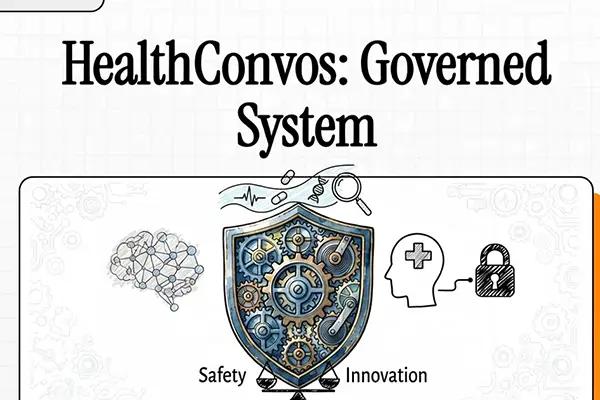
Here, we cross the line from the probabilistic world of AI into a highly governed, strictly deterministic environment. This flow shows exactly how the system aggressively filters the AI selection. First, it understands and matches.
That's the AI part. But then, bam, it immediately moves to protect, applying rigorous session safeguards, and then verify, confirming the approved status of the content. It's an independent, hardcoded verification process that ensures medical accuracy is the absolute top priority.
Let me give you a perfect example of that protect step in action. The rule to route clinical questions to the care team. The system is explicitly programmed to recognize medical questions and draw a hard line.
This completely prevents the AI from hallucinating medical advice and keeps the digital companion strictly within its defined lane of patient education. It doesn't guess. No way.
It escalates to human experts when necessary.